Advertisement


The opening minutes of Ordinary People will make you wonder whether you have accidentally stumbled into an American war thriller.
The aerial shots, the scale of the action and the sheer chaos unfolding on screen create an immediate sense that Moses Inwang is about to deliver something considerably bigger than the average Nollywood production. There is a helicopter, gunfire, a heavily armed police operation and a criminal underworld that appears to have been transported straight out of a Hollywood action movie.
It is an audacious way to begin an eight-episode Nigerian series. And for a moment, Ordinary People makes an enormous promise. The question is whether it can keep that promise after the helicopters leave the sky.
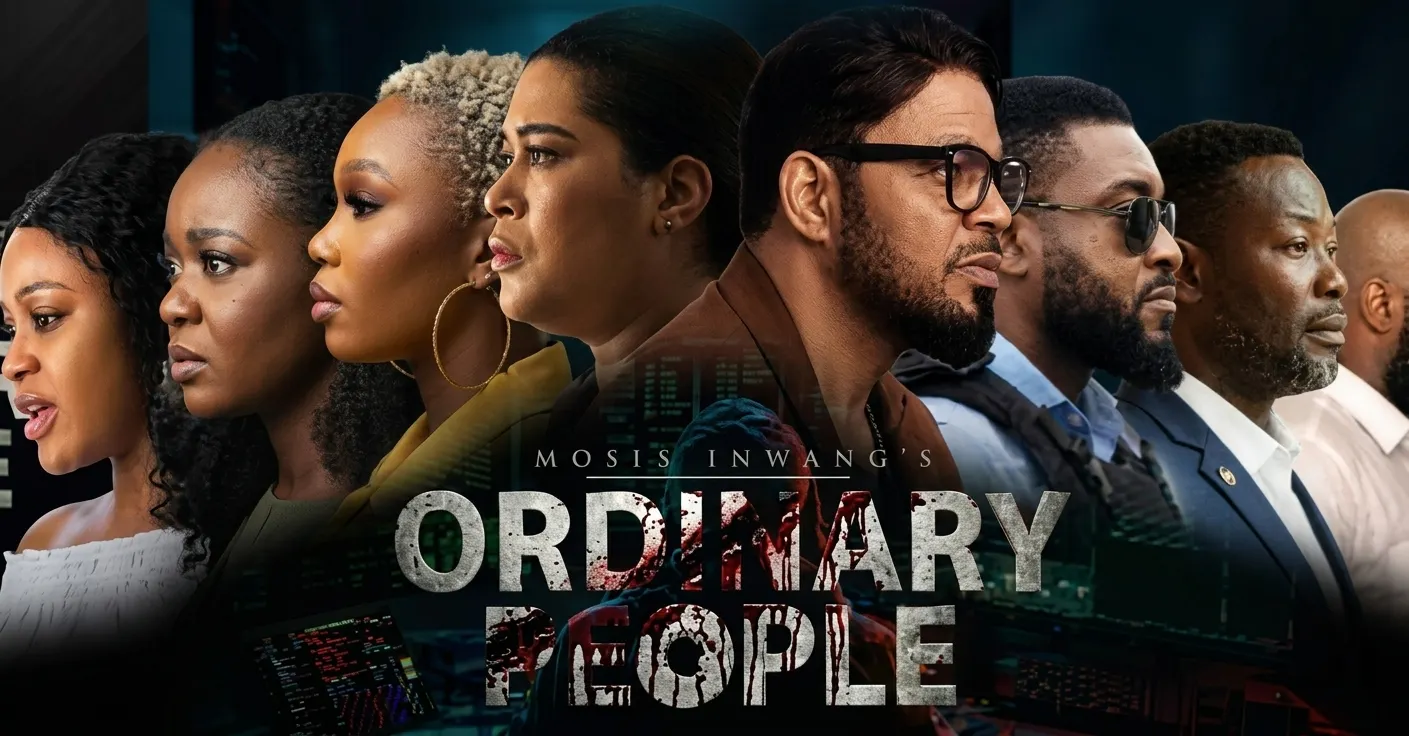
Created and directed by Moses Inwang, the Netflix series is built around Mirage Estate, an affluent community where neatly maintained houses and seemingly respectable neighbours conceal remarkably complicated lives. A wanted Niger Delta criminal, undercover intelligence officers, an abusive marriage, a troubled actress, a Ghanaian couple hiding a dangerous secret, a doctor caught in a difficult situation and a hacker who takes an unhealthy interest in his neighbours are among the threads woven into the story.
On paper, it is almost too much. And that turns out to be both the greatest strength and the biggest weakness of Ordinary People.
A Promising Beginning
The opening is undoubtedly one of the series’ strongest statements of intent. Ramsey Nouah plays Tornado, a feared criminal who, alongside his wife, is attempting to escape the consequences of his past. The sequence establishes immediately that Inwang is not interested in easing viewers gently into the story. Instead, he throws them into danger and lets the questions come later.
The production clearly wants to look expensive, and often succeeds. The estate itself is one of the series’ most convincing elements. The locations give the story a physical identity, while the action sequences demonstrate that Nollywood filmmakers are increasingly comfortable attempting stories that require scale. Even critics who were unimpressed with the overall execution have acknowledged the strength of the locations, sets and major action sequences.
The irony, however, is that the opening may set expectations too high. After promising the audience an explosive action thriller, the series spends considerable time slowing down, introducing characters and peeling away their secrets. That is not necessarily a problem. In fact, a series with this many characters needs breathing room. The problem is that the transition from action to character-driven suspense is not always as smooth as it should be.
When ‘Ordinary’ People Are Anything But Ordinary
The title is perhaps the most effective piece of storytelling in the entire project. These are ordinary people only from a distance. Behind closed doors, almost everyone has something to hide.
That idea gives the series its most interesting dimension because Ordinary People is not simply asking what happens when criminals and undercover agents occupy the same estate. It is interested in the discrepancy between the person people present to the world and the person they become when nobody is watching.
A seemingly happy marriage can conceal violence. A successful public personality can be struggling privately. A respectable neighbour can have an extraordinary criminal past. The estate therefore becomes more than a location. It becomes a collection of masks.
This is where the series feels most Nigerian and, arguably, most relatable. The idea that people can carefully construct public versions of themselves while hiding deeply troubling realities is not exclusive to Nigeria, but Ordinary People gives that familiar human contradiction a distinctly Nollywood setting.
Too Many Stories Fighting for Attention
Unfortunately, the same ambition that makes the series fascinating also creates its biggest narrative problem. There is simply a lot happening. The series wants to tell several stories simultaneously, and many of those stories could probably have carried their own productions. Critics have repeatedly pointed to this overcrowding, arguing that the accumulation of secrets, characters, betrayals and twists sometimes works against the suspense rather than strengthening it.
This is particularly noticeable because a thriller depends heavily on controlled information. The audience should be given enough to remain curious without being given so much that the mystery starts to feel mechanical.
Ordinary People occasionally crosses that line.
Instead of allowing certain mysteries to mature, the series sometimes seems eager to introduce another secret, another character complication or another revelation. The result is a story that can feel like it is constantly moving without always progressing emotionally.
This is why the series can be simultaneously entertaining and frustrating. There is always something happening, but not everything that happens carries equal weight.
The Cast Is Impressive, But Star Power Is Not Character Development
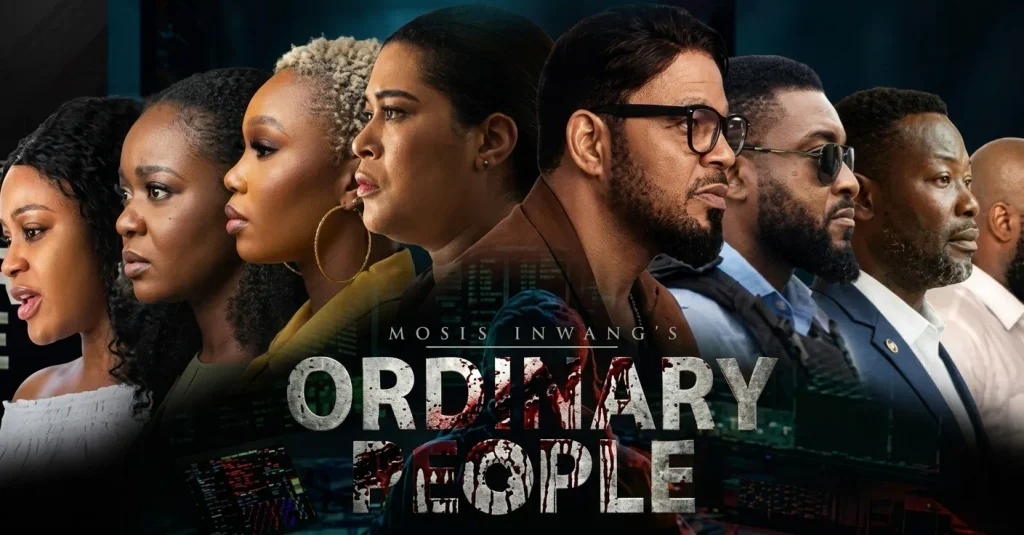
One of the easiest things to praise about Ordinary People is its cast. Ramsey Nouah, Chidi Mokeme, Adunni Ade, Sharon Ooja, Uche Montana, Michelle Dede, Jackie Appiah, Lasisi Elenu, Eddy Watson, Shawn Faqua and the rest of the ensemble give the series the kind of star power that immediately attracts attention.
Inwang himself has described the production as the most star-studded Nigerian film or television project he has made, and the scale of the ensemble certainly supports the ambition. The production was conceived six years before release and took three years to make, with filming across Lagos, Bayelsa and Berlin.
But having famous actors is not the same thing as giving them great characters. This is where Ordinary People sometimes leaves its cast stranded.
Some characters feel fully conceived, while others appear to exist primarily to move the plot forward. There are moments when you can almost see the actor underneath the character because the writing has not given the character enough emotional material to disappear completely into the role. That is particularly unfortunate in a production with this much acting talent.
Sharon Ooja Gives the Series One of Its Most Demanding Performances
Sharon Ooja’s performance deserves particular attention. Her character is psychologically complicated, and the role requires her to move through extreme emotional states. Ooja has herself described the production as one of the toughest projects she has worked on, explaining that portraying a character with bipolar disorder was mentally exhausting and required her to remain immersed in an emotional state that was far removed from her normal personality.
That effort is visible. Whether every aspect of the character’s writing works is debatable, but the performance demonstrates a willingness to go beyond the polished romantic and dramatic roles audiences may be more accustomed to seeing from her.
More importantly, the character introduces a conversation about mental health that deserves attention. The series does not treat every unusual behaviour simply as something supernatural or spiritual. Ooja’s comments about the role also reinforce an important message about recognising mental health conditions as medical issues that can require professional attention. It is one of the places where Ordinary People reaches beyond the thriller mechanics and touches something socially relevant.
Uche Montana’s Story Is Difficult to Watch
Uche Montana also benefits from one of the series’ more emotionally uncomfortable storylines. Her character’s experience of domestic abuse is not presented as the glamorous version of marriage that the outside world sees. Instead, the contrast between public perception and private suffering becomes part of the character’s tragedy.
Interestingly, social-media reactions suggest that this storyline affected viewers strongly. One viewer described Montana’s performance as triggering because of how convincingly she portrayed the experience of domestic violence.
That reaction matters. A thriller does not necessarily need to make every storyline pleasant to watch. Sometimes its responsibility is to make audiences uncomfortable enough to recognise something they would rather ignore.
In this regard, the series is more effective when it concentrates on human vulnerability than when it is simply chasing its next twist.
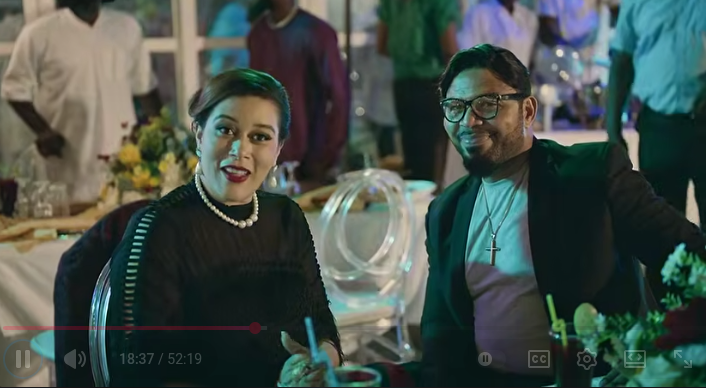
Ramsey Nouah and the Problem of Reinvention
Ramsey Nouah’s Tornado is another interesting case. The character gives Nouah an opportunity to move away from the polished leading-man image that has defined much of his career. His introduction is particularly effective because the audience meets him first as a dangerous man surrounded by violence.
The challenge comes later, when the character has to exist in a completely different reality. Some critics have argued that the present-day version of Tornado does not have the same force as the character we meet during the opening sequence.
That criticism is fair. The earlier Tornado is frightening because the film allows us to understand his capacity for violence through action. The later version depends more heavily on performance, dialogue and the audience’s memory of who he used to be.
Nouah is capable of carrying the character, but the writing does not always give him enough material to make the transformation as convincing as it could have been.
The Action Looks Better Than It Sounds
Visually, Ordinary People is often more impressive than expected. The production design and locations create the feeling of a world larger than the traditional Nollywood apartment drama. The opening action sequence and later confrontations demonstrate an appetite for scale that should be encouraged.
But there are technical inconsistencies. The series’ sound design has attracted criticism, particularly because some sequences look more expensive than they sound.
That distinction is important. Modern audiences are accustomed to highly polished international productions. Once a Nigerian series announces itself with cinematic aerial photography, elaborate action and an international streaming platform behind it, viewers will naturally judge the entire package against that standard.
A spectacular image accompanied by underwhelming sound can therefore feel more distracting than it would in a smaller production. There are also moments where visual effects and continuity issues undermine otherwise impressive sequences. One critic specifically pointed to CGI, AI-generated montages and wig continuity as technical weaknesses. These are not fatal flaws, but they are reminders that ambition has to be matched by consistency.
The Pacing Is Where the Series Loses Its Grip
Perhaps the biggest question surrounding Ordinary People is not whether it is entertaining. It is. The question is whether it is consistently suspenseful. The answer is more complicated.
The series can pull you forward because there is always another secret to discover. That explains why some viewers have responded enthusiastically despite the critical reservations. Social-media reactions include viewers describing it as a great watch, praising the storytelling and calling it a refreshing change from the familiar “Lekkiwood” formula.
Other viewers, however, have complained about the pacing and the amount of information being thrown at them. Both reactions can be true. Ordinary People is the kind of series that can become more enjoyable if you surrender to its excesses. If you approach it expecting a perfectly calibrated crime thriller, its structural weaknesses become obvious.
If you approach it as a sprawling Nollywood mystery packed with colourful characters, outrageous secrets and escalating danger, the messiness becomes part of the fun.
The Series Is Better When It Trusts Its Audience
This may ultimately be the biggest lesson for Moses Inwang. The story is strong enough not to need every mystery explained immediately. The characters are interesting enough not to need constant twists. And the production is ambitious enough not to need to prove its scale in every sequence.
There are moments when Ordinary People seems afraid that the audience might lose interest, so it adds another revelation, another complication or another dramatic beat.
But the best moments are often the quieter ones when the series allows a character to sit with a secret, when a marriage begins to crack, or when an apparently harmless interaction takes on a different meaning because the audience knows something the character does not. That is where the thriller becomes genuinely effective.
So, Did It Deliver?
Yes, but not exactly in the way the opening promises. If you are expecting eight episodes of uninterrupted Nigerian Mission: Impossible, you may be disappointed. If you are expecting a tightly controlled psychological thriller in which every character receives perfectly developed arcs, you may also find yourself frustrated.
But if you are willing to accept Ordinary People for what it is, an ambitious, star-filled, occasionally messy ensemble thriller attempting to push Nollywood towards bigger-scale serial storytelling. There is plenty to appreciate.
The production is clearly the product of serious ambition. Inwang conceived the idea six years before its release and spent three years bringing it to the screen. That investment is visible in the scale, locations and ensemble.
The problem is that the series sometimes tries to make the audience appreciate how much it has packed into the story instead of simply allowing the story to breathe. And perhaps that is why the critical response has been so divided.
One side sees an ambitious Nollywood production that is entertaining, refreshing and packed with talented actors. The other sees a promising idea buried beneath too many characters, too many secrets and uneven execution. Both readings have merit.
For me, Ordinary People sits somewhere in between. It is not the flawless Nigerian answer to the international thriller. But it is also far from the failure some early criticism might suggest. It is a bold experiment, and bold experiments are sometimes messy.
What matters is that Moses Inwang has demonstrated that Nollywood can attempt an eight-episode thriller with a genuinely large ensemble, multiple locations and the ambition to compete visually on a global streaming platform. The next step is learning when to restrain that ambition because sometimes the most powerful story is not the one with the most secrets, but the one that knows exactly which secrets are worth telling.
Also read: Reacher Season 4 Review: Bigger, Brutal and More Confident, But Can It Beat Season 1?
























Pingback: Why Did I Get Married Again? Review: Same Question, A New Generation, But Has Tyler Perry Said Enough? | Filmnology