Advertisement


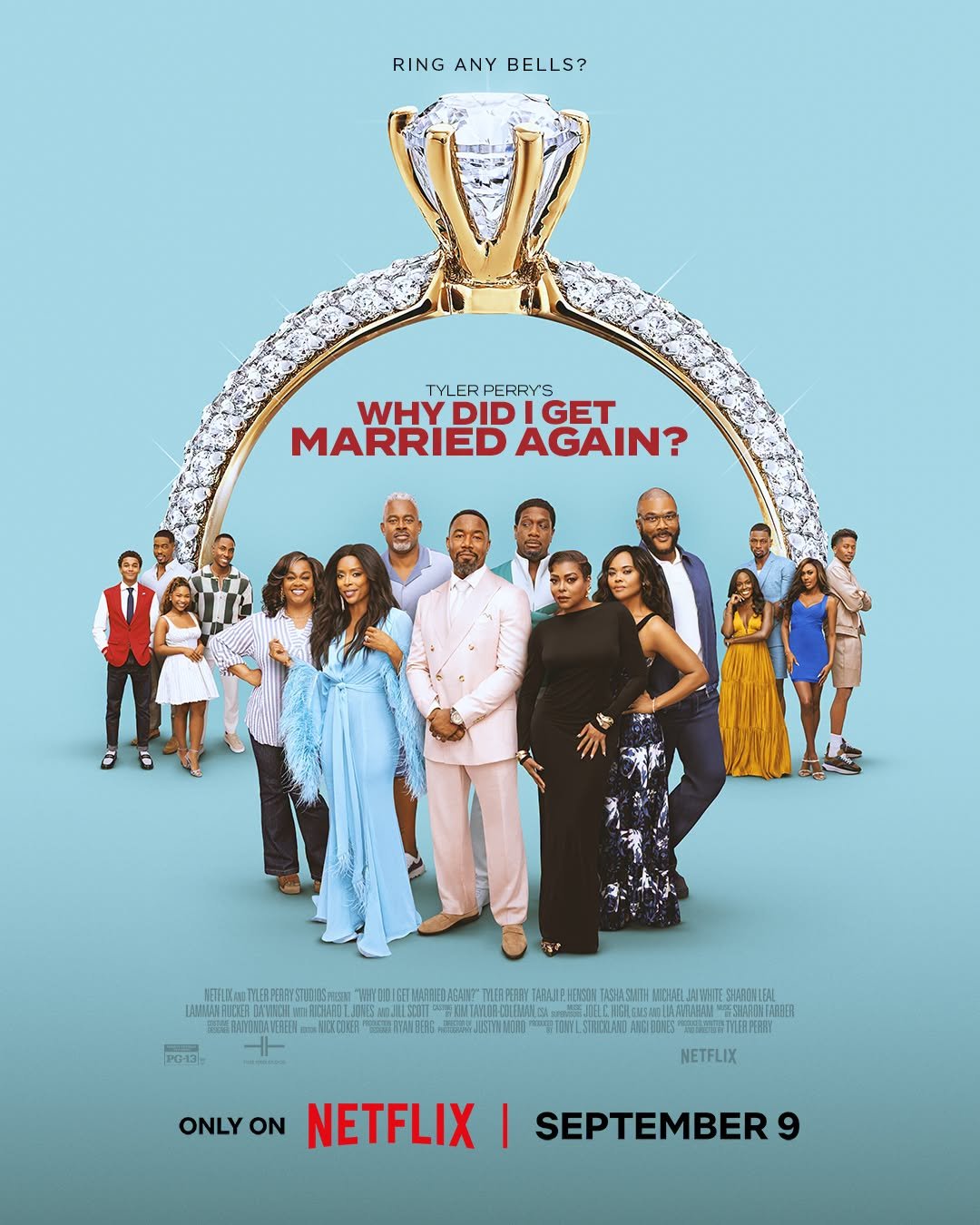
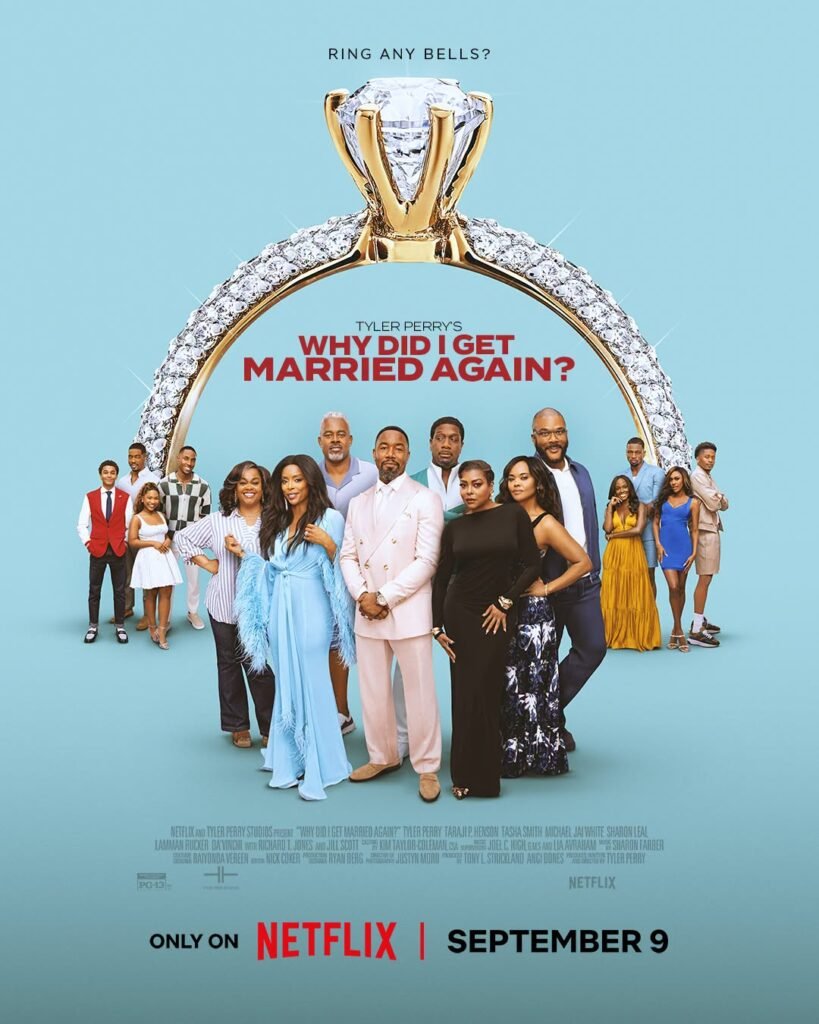
There is something strangely comforting about returning to a story you thought had already ended, particularly when the characters involved have lived long enough for their past decisions to acquire new meaning, which is exactly what Tyler Perry attempts with Why Did I Get Married Again?, nearly two decades after the original Why Did I Get Married? introduced audiences to four couples whose marriages were tested by infidelity, insecurity, resentment, disappointment and the difficult business of staying together.
The title immediately takes us back to the question that defined the first film, but this time Perry is not simply interested in whether the original couples made the right decision by getting married; instead, he expands the conversation by introducing a younger generation whose understanding of love, commitment and marriage has been shaped, consciously or unconsciously, by watching their parents navigate relationships that were often anything but perfect.
That is an interesting premise for a sequel, and, at its best, Why Did I Get Married Again? demonstrates that there is still something worth saying about these characters, although the film’s ambition is occasionally undermined by the sheer number of stories it attempts to tell.
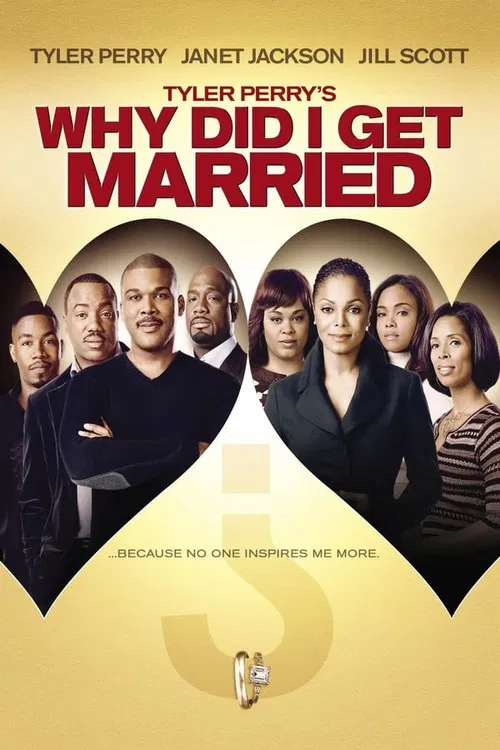
The original Why Did I Get Married?, released in 2007, brought four college friends and their spouses together for an annual retreat where the apparent stability of their marriages gradually began to unravel, forcing each couple to confront secrets and insecurities that had been hidden behind the ordinary routines of married life.
Terry and Dianne were struggling with emotional and professional distance, Marcus and Angela’s explosive relationship was complicated by infidelity and mistrust, Sheila was dealing with the consequences of her troubled marriage to Mike, while Patricia and Gavin represented another form of marital dissatisfaction that was less explosive but equally damaging.
What made the original film effective was the way it presented marriage as something considerably more complicated than romance, because Perry understood that people do not enter relationships as blank pages; they bring their childhood experiences, insecurities, expectations, selfishness and unresolved emotional wounds with them, and those things eventually find their way into the marriage.
Why Did I Get Married Again? takes that familiar idea and extends it to the next generation by asking what happens when children grow up watching their parents struggle through these very problems and then become adults who have to establish relationships of their own.
It is arguably the smartest idea in the new film.
The most compelling aspect of Why Did I Get Married Again? is the suggestion that parents pass down far more than their names, physical traits and family traditions, because they also pass down ideas about love and relationships through the examples they set at home.
The children of these characters have grown up watching their parents love each other, fight, forgive, betray, reconcile and, in some cases, remain together despite circumstances that could have destroyed the relationship, and it is therefore unsurprising that some of the younger characters begin to reproduce patterns that look remarkably similar to those of their parents.
Perry has said that bringing in the younger generation was partly about allowing these characters to experience their own imperfections while eventually recognising that their parents were never the perfect people they may have imagined them to be, and this gives the sequel an opportunity to explore the complicated relationship between parental example and personal choice.
The idea is strong because children do not learn about relationships only from the advice their parents give them; they learn from what they see, and a child who grows up watching infidelity, constant arguments, emotional distance or unconditional forgiveness may develop a very different understanding of what a healthy relationship looks like.
Unfortunately, the film does not explore this idea with quite as much depth as the premise deserves.
There is an undeniable pleasure in seeing the original characters return, particularly because the franchise has accumulated enough history for the audience to immediately understand the emotional baggage each character carries into this new chapter.
Tyler Perry returns as Terry, alongside Sharon Leal, Jill Scott, Michael Jai White, Tasha Smith and Lamman Rucker, while Taraji P. Henson joins the franchise as Roselyn, bringing another recognisable face and a different energy to an ensemble already packed with established performers.
For people who grew up with the original films, the reunion alone carries emotional value, because these are not simply actors appearing in another relationship drama; they are characters whose marriages, betrayals and reconciliations audiences have already invested in.
The problem, however, is that familiarity can become a burden when a sequel depends too heavily on nostalgia, and Why Did I Get Married Again? occasionally feels caught between wanting to give longtime viewers the reunion they came for and trying to establish a new story that can stand on its own.
The result is a film that sometimes feels as though it is attempting to serve two different audiences at the same time, with the original characters demanding attention just as the younger generation is supposed to become the emotional centre of the story.
The biggest weakness of the film is its crowded storytelling, because although there is nothing inherently wrong with an ensemble drama containing multiple characters and intersecting storylines, each storyline needs enough time and emotional development to make the audience care about its outcome.
Here, there are simply too many moving parts, with the original characters, their grown children, new romantic relationships and additional conflicts competing for attention, and the film occasionally feels less like a carefully structured relationship drama than a very complicated family gathering in which everybody arrives with a different problem.
Critics have pointed to this overcrowding, with Decider describing the film as a “15-character pileup” while criticising its exposition-heavy dialogue and choppy pacing, and that criticism captures one of the central problems with the movie because the audience is frequently asked to move from one relationship crisis to another before the previous conflict has had enough time to settle emotionally.
The irony is that the individual stories are often interesting enough to sustain our attention, but because there are so many of them, the film does not always give the strongest ones enough room to develop into something memorable.
When a character’s emotional journey begins to become genuinely compelling, the story can suddenly move somewhere else, and by the time it returns to that character, the momentum has already been diluted.
Despite those structural problems, the returning cast remains one of the strongest reasons to watch the film, because there is an ease to the relationships between these actors that cannot simply be manufactured through exposition.
Tasha Smith and Michael Jai White, in particular, remain entertaining as Angela and Marcus, whose relationship has always occupied an interesting space between comedy, frustration and genuine emotional pain, while Jill Scott’s Sheila carries the emotional history of a character who has already endured considerable disappointment and personal growth.
There is also something inherently interesting about watching people who have survived the earlier chapters of their lives return years later, because the audience gets to consider not only what has changed but also what has stubbornly remained the same.
The film is at its best during these quieter moments, when the characters discuss what they have experienced and how those experiences have shaped them, because these scenes allow the actors to use the history of the franchise rather than simply reminding the audience that the history exists.
Taraji P. Henson is one of the film’s most welcome additions, largely because she does not feel like a replacement for any of the existing characters and instead brings her own energy into a group whose dynamics have already been established over two previous films.
Her character, Roselyn, provides Henson with enough room to make an impression, and her presence helps prevent the reunion from becoming entirely dependent on nostalgia, even though the film ultimately does not give the younger characters the same depth that it gives the established stars.
That is particularly unfortunate because the younger generation should, in theory, be the reason this sequel exists.
If Perry is asking audiences to consider whether children unconsciously inherit their parents’ relationship patterns, then those children need to be developed as complete human beings rather than simply functioning as extensions of the adults we already know.
This is perhaps the greatest missed opportunity in Why Did I Get Married Again?, because the film has a genuinely relevant idea but does not push it far enough.
Instead of simply showing the younger characters repeating the mistakes of their parents, Perry could have explored how growing up inside these complicated marriages affected their understanding of intimacy, trust and commitment, particularly because children can interpret the same parental behaviour in very different ways.
One child may see a parent’s decision to forgive infidelity as evidence of strength and emotional maturity, while another may see exactly the same decision as a failure to establish boundaries, and that difference could have provided the film with a much richer examination of how family history shapes adult relationships.
Instead, the film sometimes reduces the generational conversation to the simpler observation that the children are becoming like their parents, which is certainly true within the story but is not nearly as interesting as examining why they are becoming that way and whether they can consciously choose to break the cycle.
That is the film I kept wishing Why Did I Get Married Again? would become.
Tyler Perry has always understood that humour can make difficult conversations about relationships easier for audiences to digest, and the original films were particularly effective when they moved naturally between painful revelations and moments of comedy without allowing either side to completely overwhelm the other.
The new film continues that tradition, although the humour is considerably less consistent, with some jokes emerging naturally from the personalities of the characters while others feel as though they have been inserted simply because the film believes it needs another laugh.
The jokes surrounding Mike’s wig are a good example of this approach, because they are broad, exaggerated and very much in keeping with Perry’s willingness to sacrifice subtlety for an immediate comedic reaction, which means viewers who enjoy his particular brand of humour will probably have fun with them while others may find themselves wondering why the joke has been stretched as far as it has.
This is also connected to a larger issue with Perry’s writing style, because he rarely trusts the audience to discover the message for themselves and will often have his characters explain exactly what they have learned, why they have learned it and what everyone else should take away from the experience.
That approach worked more effectively in the earlier films because the emotional foundation was stronger, whereas here the constant explanations sometimes make the film feel more like a relationship seminar than a drama about people actually living through complicated relationships.
It is important not to judge Why Did I Get Married Again? solely by asking whether it is as good as Why Did I Get Married?, because the two films are attempting slightly different things.
The 2007 original was built around four couples, one retreat and a straightforward but emotionally effective question about why people remain in marriages that are clearly causing them pain.
The new film is considerably more ambitious, because it wants to deal with the original characters, their children, generational patterns, new relationships, infidelity, family expectations and the complicated process of growing beyond the examples we were given as children.
That makes the sequel bigger, but bigger is not necessarily better.
The original had a relatively clear emotional centre, whereas the new film spreads its attention across so many characters that the emotional impact becomes diluted, and this is why viewers who come expecting the intimacy of the first film may find themselves disappointed.
Still, the sequel should not be dismissed simply because it does not recreate the original.
It has enough ideas of its own to justify its existence.
Despite the flaws, there is something undeniably warm about watching these characters return, particularly because the film remains fundamentally optimistic about the possibility of personal growth.
These people have made mistakes, hurt one another, fallen apart and attempted to rebuild their relationships, yet Perry continues to approach marriage as something that can survive imperfection when people are willing to confront themselves honestly.
That optimism may explain the difference between some of the critical reviews and the more positive audience reactions, because while critics have focused heavily on the film’s crowded narrative and uneven execution, many viewers appear to have enjoyed the nostalgia, humour and opportunity to reconnect with characters they have not seen in years.
And that audience response should not be dismissed.
A film does not necessarily fail simply because critics identify structural problems with it, particularly when the audience for whom the franchise was created finds genuine enjoyment in returning to its world.
The film’s reception on Netflix also demonstrates that there was still a considerable appetite for this franchise, with Why Did I Get Married Again? quickly finding its way into the platform’s most-watched titles.
That is significant because the gap between the previous instalment and this film is long enough for an entire generation of viewers to have grown up, and the decision to return to these characters could easily have been met with indifference.
Instead, people are watching.
That tells us that the emotional connection created by the original films has survived, even if the new film does not always live up to the potential of its premise.
Ultimately, Why Did I Get Married Again? is less interested in answering the question of why its characters got married than it is in examining what happens when the consequences of those marriages become part of the next generation’s emotional inheritance.
That is the film’s strongest idea, and it is also the reason I found myself wishing the screenplay had been more restrained, because the central concept is powerful enough to carry a much more focused story without the need for so many additional complications.
The original Why Did I Get Married? asked four couples to look honestly at their marriages, while this sequel asks them to confront another uncomfortable reality: their children have been watching everything.
They have watched the arguments, the cheating, the forgiveness, the reconciliation and the compromises, and now they are old enough to make their own decisions about love.
The tragedy is that they may have learned some of the wrong lessons.
That is where Why Did I Get Married Again? comes closest to saying something genuinely important, because relationships are rarely inherited in the literal sense, but the behaviours, expectations and emotional patterns that define them can certainly be passed from one generation to another.
Unfortunately, Perry does not always trust this idea enough to let it speak for itself, and the film frequently buries its strongest observations beneath too many characters, too much exposition and too many dramatic detours.
Why Did I Get Married Again? is not the perfect return that a franchise this beloved might have deserved, but it is also not the failure its most negative reviews make it out to be; instead, it is a nostalgic, occasionally funny and sometimes genuinely touching reunion that carries a strong central idea but struggles to give that idea the focus it deserves.
The returning cast remains enjoyable, Taraji P. Henson brings welcome energy to the ensemble, and the decision to examine the romantic lives of the younger generation through the mistakes of their parents gives the film a reason to exist beyond simply reuniting familiar faces.
What it needed, however, was restraint.
It needed fewer competing storylines, more substantial development for the younger characters and greater confidence in the emotional intelligence of its audience, because the most interesting story is not necessarily the one in which the children repeat their parents’ mistakes, but the one in which they finally understand where those mistakes came from and consciously decide not to repeat them.
That film might have been something special.
What Tyler Perry gives us instead is a pleasant, imperfect and sometimes frustrating reunion that reminds us why audiences connected with this franchise in the first place, while also demonstrating that bringing beloved characters back is considerably easier than finding a new story worthy of them.
And perhaps that is the most fitting answer to the question at the heart of the franchise: sometimes, knowing why you got married is not nearly as important as understanding what you are going to do with the marriage once you are in it.
Also read: Ordinary People Review: Big Ambition, Big Cast, But Can the Story Carry It?